Folk horror & consequence-driven adventure design
Ostara Did Not Come
A village’s spring ritual fails when a familiar lie breaks an older promise.
- My contribution
- Adventure concept, narrative, encounter structure and campaign continuity.
- Project
- Tabletop adventure · Level 2 · Five characters · 2–3 sessions
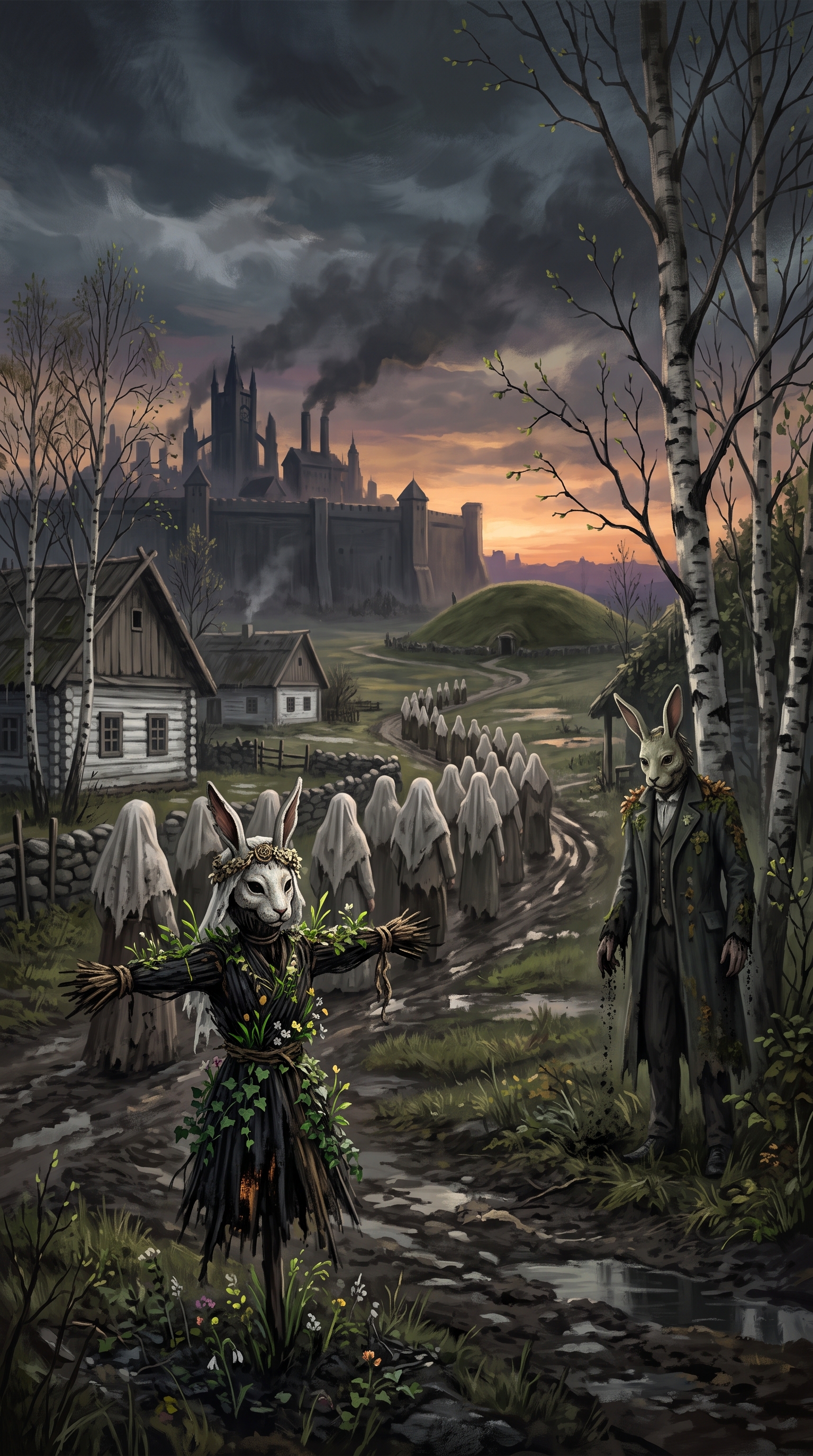
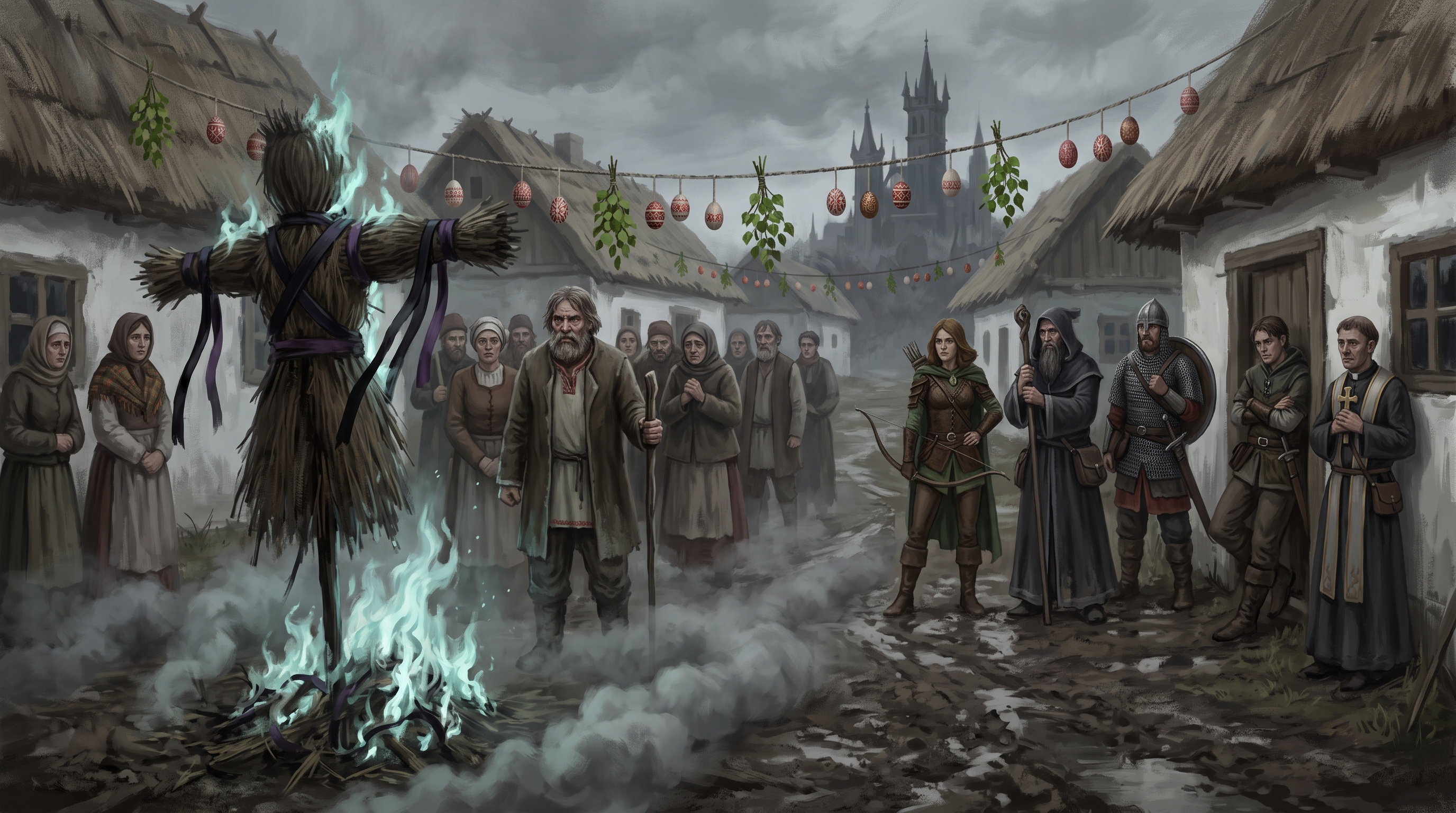
The design goal
Make discovered truths change what the party can do, while carrying the consequences of Waxen Hollow into a new investigation.
Five truths with playable consequences
The investigation lets the party visit locations in an open order. Five truths about the previous deaths, an old promise and the missing procession change encounter mechanics and the possible resolutions. Finding information therefore changes the party’s position before the final choice.
An escort encounter that communicates its hazards
A four-phase procession encounter combines movement, protection and ritual tasks. Hazards are telegraphed, sleepwalkers act in groups, and abductions can be recovered from. The party has reasons to change its priorities during the encounter.
Resolve a bargain rather than select a victory label
In the Green Reflection, the party can negotiate around voluntary choice, a communal replacement pact or breaking the pact and evacuating its captives. Five endings preserve different moral and campaign consequences. The source assumes the aftermath of a particular played Waxen Hollow outcome.
A complete development sourcebook
The full English edition includes all four acts, the five endings, four statblocks, rewards, handouts and the GM quick-reference material. It is designed for five second-level characters over two or three three-hour sessions, with advancement to level three at the end. The cover’s alternate title is The Bride of the First Furrow.
Work samples
Production context
Adventure sourcebook by Kirill Sakhin. This portfolio edition is an AI-assisted English translation of the complete Russian Homebrewery manuscript modified 26 July 2026. Illustrations are reproduced from that sourcebook. The text and mechanics remain a development manuscript.